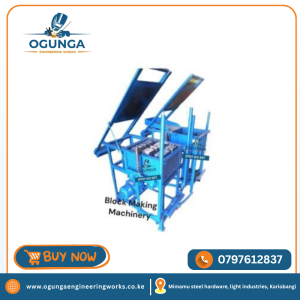
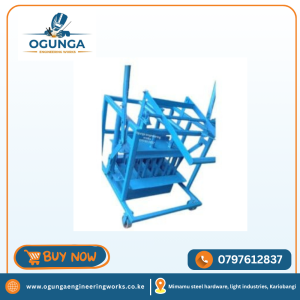
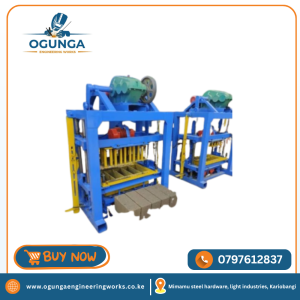
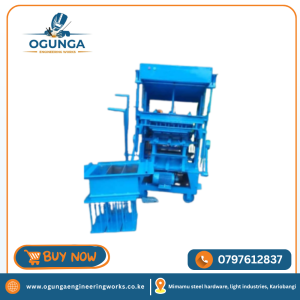
Showing all 9 results
-

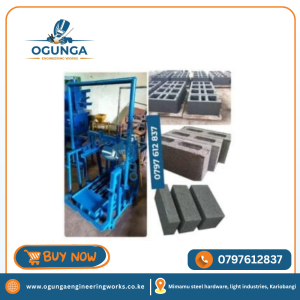
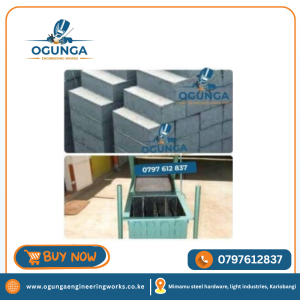
Block Machine
KSh170,000.00 -

Block making machines Nairobi
KSh250,000.00 -
Sale!

Block Master Machine
Original price was: KSh88,000.00.KSh85,000.00Current price is: KSh85,000.00. -

Block master machine
KSh85,000.00 -

Cabro machine
KSh70,000.00 -
Sale!

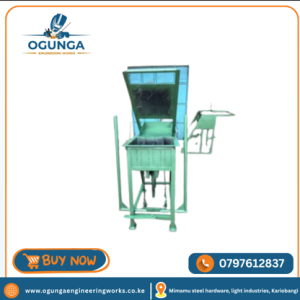
Hollow block master machine
Original price was: KSh100,000.00.KSh95,000.00Current price is: KSh95,000.00. -
Sale!

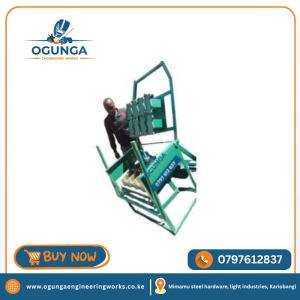
Manual block making machine
Original price was: KSh250,000.00.KSh230,000.00Current price is: KSh230,000.00. -

Multipurpose block machine
KSh1,350,000.00 -
Sale!

Static block making machine
Original price was: KSh350,000.00.KSh340,000.00Current price is: KSh340,000.00.
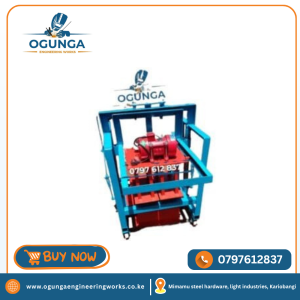
Block Making Machines in Nairobi, Kenya
The construction industry in Kenya continues to grow, and with that growth comes strong demand for reliable concrete building materials. Residential estates, apartments, schools, hospitals, warehouses, commercial buildings, factories, boundary walls and public infrastructure projects all require strong blocks that can be produced consistently and delivered on time. For contractors, developers, hardware suppliers and entrepreneurs, investing in quality block making machines in Nairobi, Kenya can create a dependable production business with long-term demand.
At Ogunga Engineering Works, we manufacture practical and durable block making machines for customers who want efficient concrete block production equipment built for Kenyan working conditions. Our machines are designed to help users produce uniform blocks with better strength, cleaner shape and reliable output. Whether you are starting a small block production yard or expanding an established construction materials business, our engineering team helps you choose a machine that fits your production target, budget, available space and future growth plans.
Most customers buying block production equipment also need proper material preparation. That is why many businesses pair our Block Making Machines with Concrete Mixing & Material Mixing Equipment to improve concrete consistency before moulding. Customers who want to diversify into kerbstones, culverts, paving products and other concrete products can also explore our Precast & Concrete Moulds for a wider production setup.
We serve customers across Nairobi, Kiambu, Machakos, Thika, Nakuru, Eldoret, Mombasa, Kisumu, Meru, Nyeri, Kakamega, Bungoma, Kisii and other counties in Kenya. Our focus is not just to sell a machine, but to supply an engineering solution that supports production, reduces downtime and helps the customer build a stronger business.
What Is a Block Making Machine?
A block making machine is a construction and industrial machine used to manufacture concrete blocks for building and infrastructure projects. It works by placing a properly prepared concrete mix into a mould, then applying compaction, vibration or pressure depending on the machine design. The result is a block with better shape, stronger bonding and more consistent dimensions than blocks made using purely manual methods.
The main purpose of a block making machine is to improve production speed and quality. Instead of producing a small number of blocks manually, a machine allows the business to produce more units within a shorter time while maintaining repeatable quality. This makes the machine useful for contractors, construction material suppliers, real estate developers, SMEs and entrepreneurs who want to serve the growing building sector in Kenya.
Block production also works well when supported by the right production environment. A good working area, quality raw materials, enough curing space, proper water supply, trained operators and reliable mixing equipment all contribute to better output. Customers setting up a complete yard can review our wider Construction & Industrial Machinery category to understand other machines that may support their operation.
Why Block Making Machines Are in High Demand in Kenya
Kenya continues to experience strong construction activity. Nairobi and its surrounding towns are expanding quickly, with new apartments, gated communities, schools, churches, hospitals, industrial parks, shops and warehouses being developed every year. At the same time, county projects across Kenya require building materials for public offices, markets, affordable housing, drainage works, health facilities and educational institutions.
This growth has created steady demand for concrete blocks. Builders need blocks that are strong, affordable, available in good quantities and consistent in size. When a supplier can produce quality blocks regularly, they can serve contractors, fundis, developers, hardware shops and private builders who need reliable building materials for ongoing projects.
For this reason, many entrepreneurs search for a block making machine supplier in Nairobi or a block making machine manufacturer in Kenya because they want equipment that can support a practical business. A well-selected machine can help a small business grow into a serious construction materials supplier, especially when the owner understands local demand and maintains good product quality.
Types of Block Making Machines
Different customers need different levels of production. A start-up may need a simple machine that is easy to operate, while an established manufacturer may need stronger equipment that can handle continuous daily output. Ogunga Engineering Works helps customers understand their production needs before choosing the right machine.
Manual Block Making Machines
Manual block making machines are suitable for small businesses, start-ups and customers who want to begin production with a manageable investment. They are easier to operate, require less complex setup and can serve local construction demand when operated properly. They are a good option for entrepreneurs who want to enter the block manufacturing business before expanding later.
Semi-Automatic Block Making Machines
Semi-automatic machines provide better production efficiency than fully manual systems while still remaining practical for many small and medium businesses. They reduce some manual effort, improve consistency and help the operator produce more blocks within a working day. This option is common for customers supplying contractors, hardware suppliers and developers who need steady output.
Automatic Block Making Machines
Automatic machines are designed for higher production needs. They are suitable for commercial manufacturers, established concrete product suppliers and businesses serving larger construction projects. When properly installed and maintained, automatic machines can improve speed, reduce labour pressure and increase daily output.
Customized Block Production Machines
Some customers need a machine built around their available space, production process or desired block size. Through our Custom Fabrications service, we can discuss special requirements and provide fabrication support where a standard machine may not fully meet the customer’s needs.
Concrete Products You Can Produce
A block making machine can support different concrete products depending on the mould design and machine setup. The exact output depends on the machine type, mould size, concrete mix and production process. Customers should choose a machine based on the products they want to sell and the demand in their target market.
Solid concrete blocks for walling and structural applications.
Hollow concrete blocks for building projects.
Partition blocks for interior and light construction work.
Interlocking blocks where suitable moulds are used.
Foundation blocks for selected construction applications.
Special block sizes based on customer and market demand.
Businesses that want to produce blocks, bricks or related concrete products may also consider Block & Brick Moulds when expanding into additional mould-based products. This allows a production yard to serve more customer needs without depending on one product line only.
Applications of Block Making Machines in Kenya
Concrete blocks are used in many types of construction projects across Kenya. This wide application is what makes block production an attractive business opportunity. The key is to produce blocks that are strong, consistent and available when customers need them.
Residential Housing Projects
Housing projects across Nairobi, Kiambu, Machakos, Kajiado, Nakuru and other growing areas require large quantities of blocks. Developers use blocks for houses, apartments, perimeter walls, internal partitions and other building works. A supplier with dependable production equipment can build long-term relationships with builders and developers in these markets.
Commercial Buildings and Institutions
Schools, hospitals, churches, offices, retail buildings, hotels and warehouses also require concrete blocks during construction. These projects often need timely supply and consistent quality, making machine production more reliable than slow manual production.
Government and County Projects
County infrastructure, public buildings, affordable housing, markets and institutional projects create demand for construction materials across Kenya. Manufacturers with reliable machines can supply local contractors involved in these developments.
Hardware Suppliers and Building Material Businesses
Hardware suppliers often serve builders who need blocks in small and medium quantities. A block production business can supply these outlets regularly, especially in growing towns where construction is active throughout the year.
Building a Complete Block Production Setup
A strong block production business needs more than the block making machine alone. It requires a practical workflow from material storage to mixing, moulding, curing, stacking and delivery. When these stages are planned well, the business produces better blocks with fewer delays and lower wastage.
The mixing stage is especially important. Poor mixing can lead to weak blocks, uneven finishing and customer complaints. A reliable mixer helps maintain the right blend of cement, sand, quarry dust, ballast, water and other approved materials. This is why many customers invest in Concrete Mixing & Material Mixing Equipment alongside their block production machine.
As the business grows, the owner may add more concrete products. For example, a yard that starts with blocks may later add kerbstones, culverts, slabs or paving products using Precast & Concrete Moulds. This approach helps the business serve more customers and improve revenue from the same construction market.
Starting a Block Manufacturing Business in Nairobi, Kenya
Starting a block manufacturing business requires planning. Before buying a machine, the owner should study local demand, identify target customers, estimate daily production, check available raw materials and plan transport. Nairobi and nearby towns offer strong demand, but competition also exists. Quality, reliability and customer service are what help a supplier stand out.
A good location is important. The production yard should be accessible to customers, close enough to construction activity and large enough for mixing, machine operation, curing and storage. Water supply, power availability and safe working space should also be considered before installation.
The business owner should also price products carefully. Block prices depend on material cost, labour, transport, curing time, wastage, machine efficiency and market rates. A reliable machine helps reduce production cost per unit by increasing output and reducing rejected products.
How to Choose the Right Block Making Machine
Choosing the right machine should not be based on price alone. A cheaper machine may look attractive at first, but if it breaks down often, produces poor-quality blocks or lacks spare parts, it can become expensive in the long run. A good machine should match your production needs and provide dependable value over many years.
Check Your Daily Production Target
Start by estimating how many blocks you want to produce per day. A small start-up may not need the same capacity as an established supplier serving large contractors. Matching the machine to your production target prevents unnecessary overspending and avoids buying equipment that is too small for your market.
Consider the Type of Blocks You Want to Produce
Different block sizes and shapes require the right mould setup. Before buying, be clear about the block sizes your customers need most. In some markets, hollow blocks may move faster, while in other areas, solid blocks or special sizes may be preferred.
Think About Available Space and Power
The production yard must have enough space for the machine, mixer, materials, workers, curing area and finished stock. Power requirements should also be considered depending on the machine type.
Ask About Maintenance and Spare Parts
Any machine used daily requires servicing. Buying from a local engineering company gives customers easier access to support, repairs, parts and practical advice. Ogunga Engineering Works provides local support because our machines are built for the same market our customers operate in.
Maintenance Tips for Block Making Machines
Proper maintenance protects your investment and keeps the machine productive. Operators should inspect the machine before use, clean it after production, lubricate moving parts and report any unusual noise or vibration early. Preventive maintenance is much cheaper than emergency repairs.
Clean the Machine After Production
Concrete residue should not be allowed to harden around moulds, moving components or contact surfaces. Cleaning the machine after work helps maintain accuracy and prevents unnecessary wear.
Lubricate Moving Parts
Bearings, shafts, guides and other moving parts should be lubricated regularly. Proper lubrication reduces friction and extends the life of important components.
Train Operators Properly
A machine can only perform well when operated correctly. Operators should understand loading, mixing, moulding, demoulding, safety procedures and daily inspection routines. Poor operation can damage the machine and reduce block quality.
Use Quality Materials
Strong blocks depend on a good mix. Cement, sand, quarry dust, ballast and water should be measured and mixed correctly. Poor materials can lead to weak blocks even when the machine is strong.
Common Mistakes to Avoid
Many new buyers make mistakes that reduce profitability. Understanding these mistakes before purchasing can help you make a better decision and protect your investment.
Buying a machine based only on low price.
Ignoring the actual daily production target.
Using poor-quality concrete mixes.
Failing to plan enough curing space.
Operating the machine without proper training.
Skipping cleaning and lubrication.
Buying equipment without local technical support.
Failing to study market demand before production starts.
Why Choose Ogunga Engineering Works?
Ogunga Engineering Works combines practical engineering knowledge with local manufacturing experience. We understand the needs of contractors, developers, manufacturers and entrepreneurs because we build machinery for real Kenyan working environments. Our focus is to manufacture equipment that is strong, serviceable and useful for customers who want dependable production.
Customers choose us because they get local support, practical advice and fabrication experience. We can guide customers before purchase, help them understand machine options and support them after the machine is delivered. This makes us a trusted partner for anyone looking for block making machines in Nairobi, Kenya or related construction machinery across the country.
Locally manufactured block making machines.
Strong fabrication and durable machine design.
Support for machine customization and modifications.
Technical guidance before and after purchase.
Practical machines built for Kenyan conditions.
Support for customers across Nairobi and Kenya.
Wide range of related engineering products.
Customers working on wider construction, farming, infrastructure or structural projects can also explore our Water & Waste Management Products, Car Shades & Outdoor Structures and Agricultural & Farm Machinery categories where appropriate. This gives businesses access to more engineering solutions from one trusted supplier.
Frequently Asked Questions
Do you manufacture block making machines in Kenya?
Yes. Ogunga Engineering Works manufactures and supplies block making machines locally for customers in Nairobi and across Kenya.
Which block making machine is best for my business?
The best machine depends on your budget, production target, available space, type of blocks and future expansion plans. Our team can guide you based on your specific needs.
Can I produce different block sizes?
Different block sizes depend on the machine and mould setup. If you need specific sizes, share your requirements so we can advise on the most suitable option.
Do you supply outside Nairobi?
Yes. We serve customers across Kenya, including Nairobi, Kiambu, Machakos, Mombasa, Kisumu, Nakuru, Eldoret, Thika, Meru, Nyeri and other regions.
Do I need a concrete mixer for block production?
A mixer is highly recommended because it improves concrete consistency and helps produce stronger, more uniform blocks. Many customers combine a block machine with concrete mixing equipment for better results.
Can you help me set up a complete production line?
Yes. We can advise on block making machines, mixers, moulds and related equipment depending on your production goals and available space.
How do I request a quotation?
You can contact Ogunga Engineering Works with your production requirements, and our team will recommend a suitable machine and provide a quotation.
Request Block Making Machines in Nairobi, Kenya
If you are looking for reliable block making machines in Nairobi, Kenya, Ogunga Engineering Works is ready to help you choose equipment that matches your business goals. Whether you are starting a new block production business, supplying contractors, expanding your construction material yard or upgrading old equipment, we manufacture practical machines built to support long-term production.
Visit the Ogunga Engineering Works Home Page, browse available solutions through our Shop, learn more about our company on the About Us page, or Contact Us today to request a quotation and speak with our engineering team.